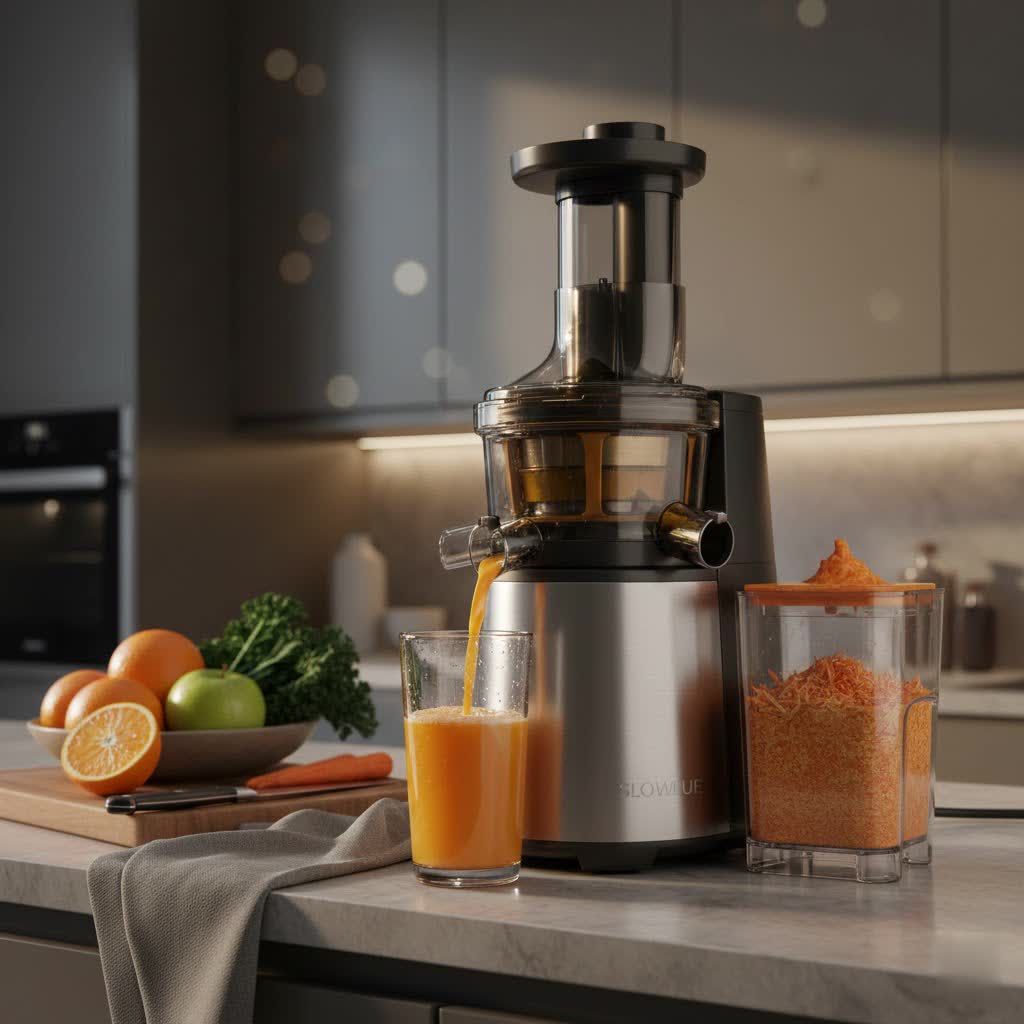
Embarking on a journey to healthier living often leads us to the vibrant world of fresh juices. For many, a slow juicer, also known as a masticating juicer, represents the pinnacle of juice extraction, promising nutrient-dense concoctions that centrifugal models simply can’t match. But once you commit to the slow juicing revolution, a new dilemma emerges: should you choose a vertical or a horizontal slow juicer? Each design offers unique benefits and drawbacks, tailored to different juicing habits and kitchen setups. Understanding these distinctions is key to selecting the perfect appliance that will not only fit your countertop but also your lifestyle.
Choosing Your Slow Juicer: A Detailed Guide
The decision between a vertical and horizontal slow juicer hinges on your specific needs, from the types of produce you frequently juice to your available kitchen space and desired versatility. Both designs harness the cold-press method, slowly grinding and pressing ingredients to extract juice while minimizing heat buildup and oxidation. This gentle process preserves more vitamins, enzymes, and overall nutritional integrity, resulting in a superior juice quality with vibrant flavors and colors, and significantly less foam compared to high-speed centrifugal juicers.
Advantages of Slow Juicers
Table is empty.Slow juicers stand apart from their centrifugal counterparts primarily due to their low-speed operation. Unlike high-speed juicers that can generate heat and introduce air, leading to nutrient degradation and oxidation, slow juicers operate at much lower RPMs (revolutions per minute). This cold-press technology ensures that delicate vitamins, enzymes, and antioxidants remain largely intact, delivering a truly wholesome beverage. You’ll notice the difference in the juice itself: it’s richer in color, smoother in texture, and separates much less quickly, allowing for a longer shelf life in the refrigerator. Moreover, the masticating action is more efficient, extracting a higher yield of juice from your produce, which ultimately saves you money over time.
Understanding Vertical Slow Juicers
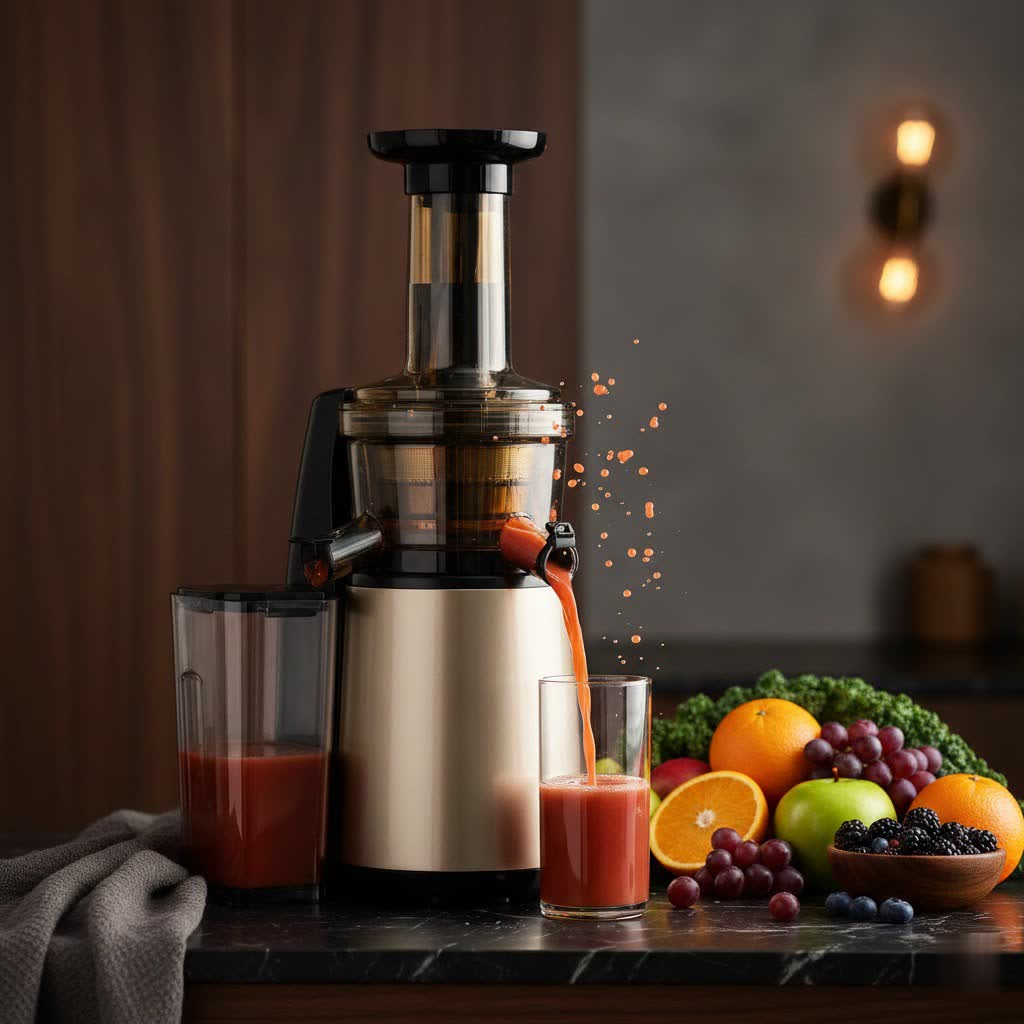
Vertical slow juicers are recognized for their sleek, upright design, making them a popular choice for modern kitchens with limited counter space. Their compact footprint allows them to tuck neatly into corners or under cabinets, a significant advantage in smaller apartments or crowded culinary environments. Gravity plays a crucial role in their operation; produce easily falls down the wide feed chute into the vertical auger, which then slowly presses the ingredients against a screen.
These juicers excel at processing soft fruits like oranges, berries, grapes, and kiwis, as well as harder fruits such as apples and pears. The vertical orientation often leads to a faster juicing process for these types of produce, as less manual pushing is required. The juice produced by vertical models tends to be clearer with less pulp, a preferred texture for many enthusiasts. Cleaning can also be relatively straightforward, especially with newer models that feature a juice cap for quick rinsing. However, they may struggle with long, fibrous leafy greens like celery or kale, which can sometimes wrap around the auger or clog the pulp ejector, requiring more frequent stops for clearing.
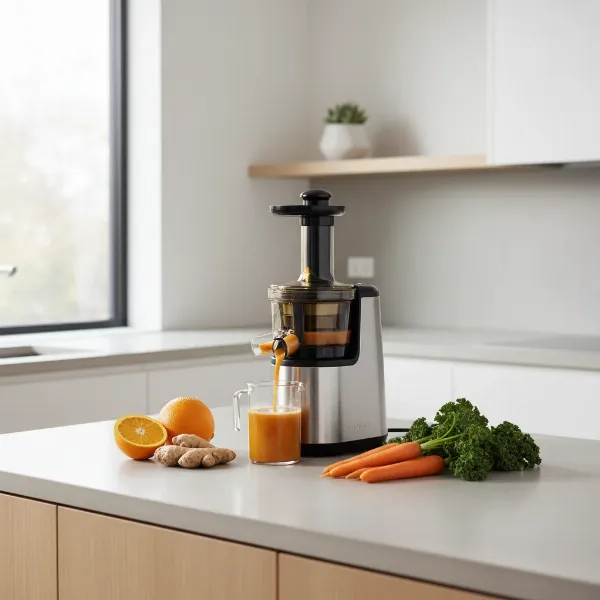 A sleek, compact vertical slow juicer extracting juice in a modern kitchen setting
Understanding Horizontal Slow Juicers
In contrast, horizontal slow juicers, often referred to as “horizontal masticating juicers” or “single-gear juicers,” present a different set of strengths. Their elongated design may take up more counter space, but this configuration allows for incredible versatility that extends far beyond just juicing. Horizontal models are the undisputed champions for leafy greens, wheatgrass, and fibrous vegetables like celery and kale. The horizontal auger effectively chews through these challenging ingredients, pressing them against a wider screen to extract a remarkably high yield of juice with very dry pulp. This efficiency with greens means you get more juice and less waste from your most fibrous produce.
Beyond juicing, many horizontal models come with additional attachments, transforming them into multi-purpose kitchen appliances capable of making nut milks, sorbets, pasta, baby food, and even grinding coffee or spices. Their robust build and design often contribute to a slightly quieter operation compared to some vertical models. While they might require more pre-chopping for wider fruits and vegetables due to narrower feed chutes, their exceptional performance with a diverse range of ingredients makes them a favorite for those seeking maximum utility from their juicer.
Comparison Table: Vertical vs. Horizontal Slow Juicers
To help you visualize the key differences, here’s a direct comparison:
| Feature | Vertical Slow Juicer | Horizontal Slow Juicer |
|---|---|---|
| Design | Compact, upright, space-saving | Wider, larger footprint, more elongated |
| Best For | Soft fruits (berries, oranges), hard fruits (apples) | Leafy greens (kale, spinach), fibrous veggies (celery, wheatgrass), root vegetables |
| Versatility | Primarily juicing, some with basic attachments | Highly versatile (nut milks, sorbets, pasta, baby food) |
| Juice Yield | Good for soft/hard fruits, lower for leafy greens | Excellent for leafy greens/fibrous, good for others |
| Pulp | Generally clearer juice, less pulp | Drier pulp, especially from greens; can be pulpier with soft fruits |
| Prep Time | Often less due to wider chutes (for vertical) | More pre-chopping due to narrower chutes |
| Cleaning | Can be quicker, especially with juice caps | Might require more brushing for certain parts, but components often designed for easy disassembly |
| Noise Level | Low | Slightly quieter on average |
| Price | Varies; some budget-friendly options, but can be high-end | Varies; can be more expensive due to versatility and durability |
Top Slow Juicer Brands and Popular Models
The slow juicer market boasts several reputable brands, each with models catering to different preferences. Hurom is renowned for its vertical slow juicers, often featuring innovative designs and efficient juice extraction, particularly for fruits. Kuvings offers both vertical and hybrid models, with popular choices like the Kuvings Whole Slow Juicer and the REVO830, known for their powerful motors and wide feed chutes, making prep less tedious. Omega is a long-standing favorite, particularly for its horizontal juicers which excel at handling leafy greens and offer exceptional versatility for various food processing tasks. Brands like Nama have gained popularity for their batch juicers, combining efficiency with sleek aesthetics, while Nutribullet and Cuisinart offer more budget-friendly entry points into the slow juicing world, making quality juicing accessible to a wider audience. The Tribest Greenstar 5 Juicer, while a twin-gear model, is often cited for its supreme versatility and yield.
Factors to Consider When Buying a Slow Juicer
Choosing the right slow juicer involves more than just picking a vertical or horizontal model. Consider your usage needs: Are you juicing daily for a family or occasionally for yourself? Do you prioritize leafy green juices or soft fruit blends? Your budget is also a critical factor; while basic models are affordable, high-end, versatile juicers can be a significant investment.
Key technical specifications include motor power and RPM: lower RPMs (e.g., 43-80 RPM) generally signify a more thorough, gentler extraction. Material quality (BPA-free plastics, stainless steel) impacts both durability and safety. Ease of cleaning is paramount—look for models with fewer parts and included cleaning brushes. Noise level is often low for slow juicers, but some are quieter than others. Finally, consider the feed chute size (wider chutes reduce chopping time) and warranty for peace of mind.
Tips for Using and Maintaining Your Slow Juicer
To get the most out of your slow juicer and ensure its longevity, proper usage and maintenance are essential. When preparing produce, remember to cut larger fruits and vegetables into manageable pieces, especially for horizontal juicers with narrower chutes, to prevent jamming. For leafy greens in vertical juicers, try alternating them with harder fruits or vegetables to help push them through more efficiently. Avoid overloading the machine; feed produce gradually to allow the auger to process it effectively.
Cleaning should ideally happen immediately after each use. Disassemble the parts and rinse them under running water to remove pulp before it dries and hardens. Most parts are not dishwasher safe; refer to your manual. Use the provided cleaning brush, especially for the screens, to thoroughly remove any lodged fibers. For vertical juicers with a juice cap, closing the cap and pouring a cup of water through the chute can help flush out residual pulp before disassembly. Store your juicer in a dry, safe place, ensuring all parts are completely dry to prevent mold or odors. Regular care will keep your slow juicer performing optimally for years to come.
“The true magic of slow juicing isn’t just in the nutrients; it’s in the quiet, meditative process that connects you to the pure essence of nature’s bounty.” – Dr. Elara Vance, Nutritionist and Author of “The Juicing Lifestyle”
Conclusion
The choice between a vertical and horizontal slow juicer ultimately boils down to aligning the juicer’s strengths with your personal juicing preferences and kitchen environment. Vertical models offer a compact footprint and efficient juicing for fruits, ideal for those with limited space and a love for fruit-centric juices. Horizontal juicers, while larger, provide unmatched versatility and superior performance for leafy greens and fibrous vegetables, making them a powerhouse for comprehensive nutritional needs. By considering factors like space, preferred produce, versatility, and ease of cleaning, you can confidently select the slow juicer that will become your trusted partner in pursuing a healthier, more vibrant life. Which slow juicer will kickstart your journey to wellness?
Frequently Asked Questions
Are vertical slow juicers faster than horizontal ones?
Vertical slow juicers can often process soft and hard fruits more quickly due to gravity assisting the feed. However, horizontal juicers may take longer for certain produce as they require more pre-chopping and careful feeding, though they are more efficient for fibrous greens.
Can horizontal juicers make nut milk?
Yes, many horizontal slow juicers are highly versatile and come with specific attachments or settings that allow them to make fresh nut milks, sorbets, pasta, and baby food, expanding their functionality beyond basic juicing.
Which type of slow juicer is better for beginners?
Both types can be suitable for beginners, but a vertical slow juicer might be perceived as easier to start with due to its wider feed chute reducing prep time for many common fruits. However, if a beginner’s primary goal is leafy green juicing, a horizontal model is superior.
Do vertical juicers clog easily with fibrous vegetables?
Vertical juicers can sometimes struggle with long, fibrous vegetables like celery or wheatgrass, leading to pulp buildup and potential clogging around the auger or pulp ejector. Chopping these ingredients into smaller pieces and alternating them with harder produce can help prevent this issue.