In today’s world, where kitchen space can be a precious commodity, choosing the right appliances is crucial. For health enthusiasts and juice lovers, a slow juicer is often a must-have, yet its size can be a deterrent. Fortunately, innovations in design mean you no longer have to sacrifice counter space for nutrient-rich, homemade juice. This guide dives into the best slow juicers perfectly suited for compact kitchens and minimalist lifestyles, ensuring you can enjoy fresh juice without clutter.
The Undeniable Advantages of Slow Juicers
Slow juicers, also known as masticating or cold-press juicers, operate at lower speeds compared to their centrifugal counterparts, typically between 40 and 100 RPM. This gentle, crushing action offers several significant benefits for both the quality of your juice and your overall juicing experience.
Firstly, slow juicers are superior in retaining vitamins, minerals, and enzymes. The low-speed process minimizes heat buildup and oxidation, preserving more of the delicate nutrients found in fruits and vegetables. This means your juice is not only more vibrant in color and flavor but also packed with more health benefits.
Secondly, you’ll notice significantly less foam and juice separation. Centrifugal juicers, with their high-speed blades, incorporate more air into the juice, leading to quicker oxidation and a frothy top layer. Slow juicers produce a smoother, denser juice that stays fresh longer when stored properly in an airtight container for 24-48 hours.
Lastly, slow juicers are remarkably efficient in extracting juice from a wide variety of produce. They excel with leafy greens like kale and spinach, fibrous vegetables such as celery, and even wheatgrass – ingredients that often challenge centrifugal models. This efficiency translates to a higher juice yield and drier pulp, meaning less waste and more value from your produce.
Types of Slow Juicers Ideal for Compact Living
When space is a primary concern, the design of your slow juicer becomes paramount. The two main types are vertical and horizontal, each offering distinct advantages for small kitchens.
Vertical Slow Juicers
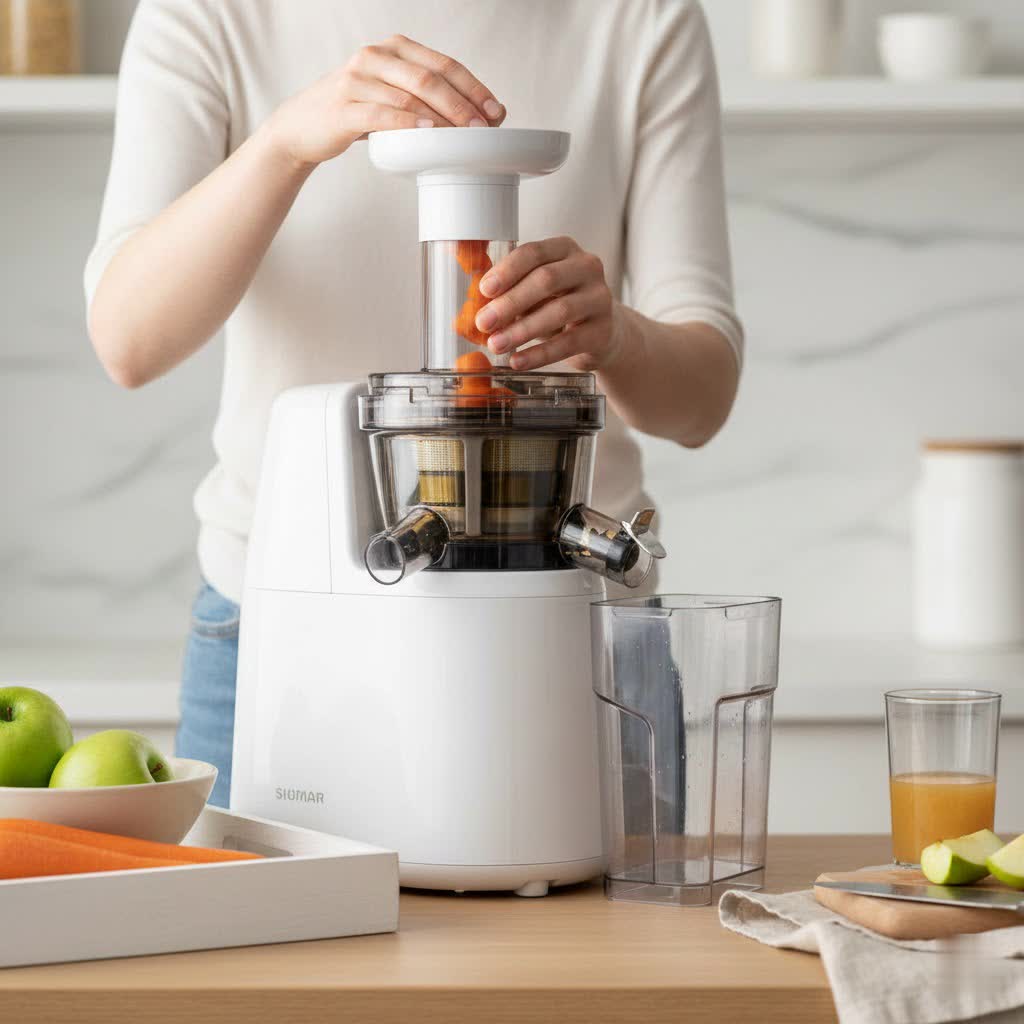
Table is empty.Vertical slow juicers are characterized by their upright design, making them inherently more space-efficient on a countertop. They typically feature a wide feed chute, which can significantly reduce preparation time as you often don’t need to chop ingredients into tiny pieces. While they are excellent for soft fruits like oranges, berries, and kiwis, some vertical models might be less efficient with very fibrous greens, potentially requiring more manual clearing or specific techniques. However, newer vertical designs often incorporate features to better handle a broader range of produce.
Horizontal Slow Juicers
Horizontal slow juicers, while generally taking up more counter space due to their wider profile, can still be excellent choices for minimalist homes, especially if versatile functionality is desired. These models often come with additional attachments that allow them to do more than just juice, such as making nut butters, pasta, sorbets, or baby food. They are particularly known for their superior performance and higher juice yield with leafy greens and fibrous vegetables, often producing exceptionally dry pulp. Some compact horizontal models are available, but their longer form factor needs to be considered.
Mini and Compact Slow Juicers
A specific category catering directly to small kitchens and minimalist homes includes mini and compact slow juicers. These models are designed with a slim, minimalist frame and easy assembly to minimize their footprint and storage requirements. While their capacity might be lower, often suitable for single servings, they still pack a powerful motor and perform surprisingly well, especially for daily wellness shots. They prioritize ease of use, quick cleanup, and portability, making them perfect for those who juice regularly but have limited space.
Comparison of Leading Slow Juicer Brands for Small Spaces
Choosing a slow juicer involves weighing features, performance, and price. Here’s a look at brands and models that frequently appear in recommendations for compact kitchens:
| Brand/Model | Type | Best For | Typical RPM | Price Range (USD) | Key Features for Small Spaces |
|---|---|---|---|---|---|
| Dash Deluxe Compact | Vertical | Single servings, quick shots | 40-60 RPM | $80-$100 | Slim, minimalist frame, easy assembly, very compact, handles fibrous greens well. |
| Kuvings B6000 | Vertical | Compact whole-fruit juicing | 40-60 RPM | $300-$500 | Accepts large pieces, user-friendly, clean juice, relatively compact. |
| Nutribullet Slow Juicer | Vertical | Beginners, quick, hands-off | 40-60 RPM | $100-$200 | Intuitive controls, fast operation, compact, wide mouth for less prep. |
| Omega VSJ843 | Vertical | Leafy greens, compact kitchens | 60-80 RPM | $300-$600 | Combines vertical design with good leafy green performance, durable. |
| Elite Gourmet EJX600 | Vertical | Budget-conscious, versatile ingredients | 40-80 RPM | $70-$150 | Space-saving, heavy-duty auger for fruits, greens, nuts; BPA-free, dishwasher-safe. |
Note: Prices are approximate and can vary based on retailer and promotions.
The Dash Deluxe Compact Masticating Slow Juicer is particularly highlighted for its slim, minimalist design and easy assembly, making it an excellent choice for those with limited storage. Despite its small size, it handles fibrous ingredients like kale effectively and processes ginger quickly. The Nutribullet Slow Juicer is another strong contender for beginners, offering intuitive controls and a compact footprint, though some users note juice quality can degrade quicker overnight. For those willing to invest a bit more for enhanced features in a compact vertical design, the Kuvings B6000 offers whole-fruit capabilities while maintaining a smaller countertop presence.
Your Comprehensive Guide to Choosing a Slow Juicer
Selecting the perfect slow juicer for a small kitchen or minimalist home requires careful consideration of several factors. By focusing on your specific needs, you can find a machine that seamlessly integrates into your lifestyle.
Determine Your Juicing Needs and Frequency
Consider how often you plan to juice and for how many people. If you’re a daily juicer for one or two, a compact model with a smaller capacity (like the Dash Deluxe Compact) might be perfect. If you occasionally make larger batches for a family, you might prioritize a model with a slightly larger juice container, even if it has a slightly bigger footprint, like the Kuvings B6000.
Set a Realistic Budget
Slow juicers range widely in price. Entry-level models offer good value for casual users, while high-end machines provide superior yield, durability, and nutrient retention. For small kitchens, budget-friendly options like the Aicok Masticating Juicer or Elite Gourmet EJX600 can be excellent starting points. Remember that a higher initial investment often pays off over time through better performance and a longer lifespan.
Key Factors to Prioritize in a Small Kitchen
- Dimensions and Footprint: Measure your available counter and storage space. Vertical juicers are generally better for narrow countertops, while horizontal models require more width. Some taller vertical juicers might not fit under low cabinets, so check height specifications.
- Ease of Assembly and Disassembly: In a minimalist home, appliances that are easy to set up and take apart are invaluable. Look for models with fewer parts that click or lock into place intuitively.
- Cleaning Efficiency: This is a major pain point for many juicers. Prioritize models with dishwasher-safe parts, fewer nooks and crannies for pulp to stick, and effective cleaning brushes. The Omega Time Saving Cold Press Batch Juicer, for example, is lauded for its ease of cleaning with no mesh filter.
- Noise Level: Slow juicers are generally quieter than centrifugal models, but some are more discreet than others. If your kitchen is part of an open-plan living space or you juice early mornings, a quiet operation (around 40-60 dB) is a significant advantage.
- Material Quality: Look for BPA-free plastics and durable components to ensure longevity and safety.
- Feed Chute Size: A wider feed chute reduces the need for extensive pre-chopping, saving time and effort, which is always a plus in any kitchen size. However, some compact models may have narrower chutes, requiring a bit more prep.
Top Slow Juicers for Small Kitchens and Minimalist Homes
Here are some highly-regarded slow juicers that balance performance with a compact design, making them excellent choices for limited spaces:
- Dash Deluxe Compact Masticating Slow Juicer: This is often cited as the best compact option for its slim frame, easy assembly, and powerful performance despite its size. It’s ideal for single servings and wellness shots, handling fibrous produce well.
- Kuvings B6000: A fantastic vertical option that balances a relatively compact footprint with the ability to juice whole fruits, reducing prep time. It’s user-friendly and produces high-quality juice.
- Nutribullet Slow Juicer: An excellent choice for beginners due to its intuitive controls and efficient juicing. It offers a compact design and a wide mouth for convenience.
- Omega VSJ843 Vertical Masticating Juicer: Known for its quiet operation and powerful dual-edge auger, this vertical juicer excels with leafy greens and soft produce in a compact form factor.
- Elite Gourmet EJX600 Compact Masticating Slow Juicer: A budget-friendly yet capable option, praised for its space-saving design and heavy-duty auger that extracts well from various ingredients.
Each of these models offers a unique blend of features designed to make slow juicing accessible and convenient, even in the most modest of kitchens.
Essential Tips for Using and Maintaining Your Slow Juicer
To ensure your slow juicer remains a valuable asset in your small kitchen, proper usage and maintenance are key.
Operating Your Slow Juicer
- Prepare Your Produce: Even with wide feed chutes, chopping produce into manageable pieces (especially fibrous or hard items) can prevent clogging and extend the life of your motor.
- Feed Gradually: Don’t overload the chute. Feed ingredients slowly to allow the auger to thoroughly process them and maximize juice extraction.
- Alternate Ingredients: When juicing a mix of soft and hard produce, alternate them. For example, follow soft berries with a firmer apple to help push through residual pulp.
- Use Reverse Function: If the juicer jams, use the reverse function to clear obstructions without disassembly.
Cleaning and Storage
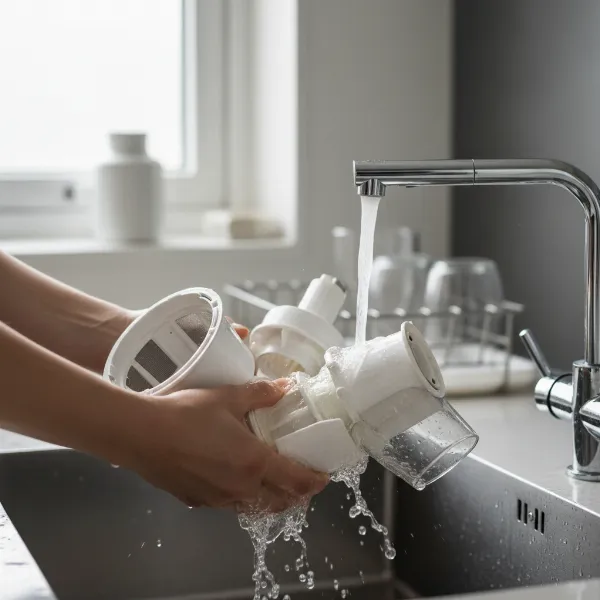
- Immediate Rinse: The golden rule for juicer cleaning is to rinse all removable parts immediately after use. Dried pulp is much harder to remove.
- Dedicated Brush: Use the provided cleaning brush, especially for the strainer and auger, to dislodge any stubborn fibers. Many parts are dishwasher-safe, but always check your manual first.
- Deep Clean Periodically: For a thorough clean, soak parts in warm soapy water. Some vertical juicers are designed with fewer parts for easier cleaning, making them ideal for minimalist routines.
- Smart Storage: Once clean and dry, stack parts or utilize the compact design of your vertical juicer to tuck it away in a cabinet or a less-used corner of your countertop.
Conclusion
Embracing a healthy, juice-filled lifestyle doesn’t require a sprawling kitchen. With the right compact slow juicer, you can unlock the benefits of fresh, nutrient-rich beverages even in the smallest of spaces. Whether you prioritize ultra-portability, efficient leafy green processing, or a user-friendly experience for beginners, a perfect slow juicer exists to complement your small kitchen and minimalist home. By considering factors like size, ease of cleaning, and specific juicing needs, you can make an informed choice that enhances your wellness journey without compromising on precious counter space.
What is your ideal balance of compactness and juicing versatility for your home?
Frequently Asked Questions
What makes a slow juicer ideal for small kitchens?
Slow juicers ideal for small kitchens typically feature a compact, upright (vertical) design, minimal parts for easy assembly and cleaning, and a smaller overall footprint to fit on limited counter space or tuck away easily in cabinets.
Can compact slow juicers handle all types of produce?
Most compact slow juicers perform well with a variety of fruits and vegetables, including soft fruits, hard root vegetables, and leafy greens. However, very compact models might have smaller feed chutes requiring more pre-chopping, and some vertical designs may need more effort with highly fibrous greens compared to larger horizontal counterparts.
How often should I clean my slow juicer?
It’s best to clean your slow juicer immediately after each use by rinsing all removable parts to prevent pulp from drying and sticking. A deeper clean with soap and water should be done regularly, and some models have dishwasher-safe parts for added convenience.
Are compact slow juicers less powerful than full-sized ones?
Not necessarily. While they are smaller, many compact slow juicers feature powerful motors and efficient masticating technology that can extract high yields of juice. Their capacity might be lower, but their juicing efficiency remains high for typical home use.
What is the typical noise level of a compact slow juicer?
Slow juicers are generally quieter than centrifugal juicers, operating at low speeds (e.g., 40-80 RPM). Compact models often maintain a quiet operation, making them suitable for use in smaller living spaces without causing significant disruption.